

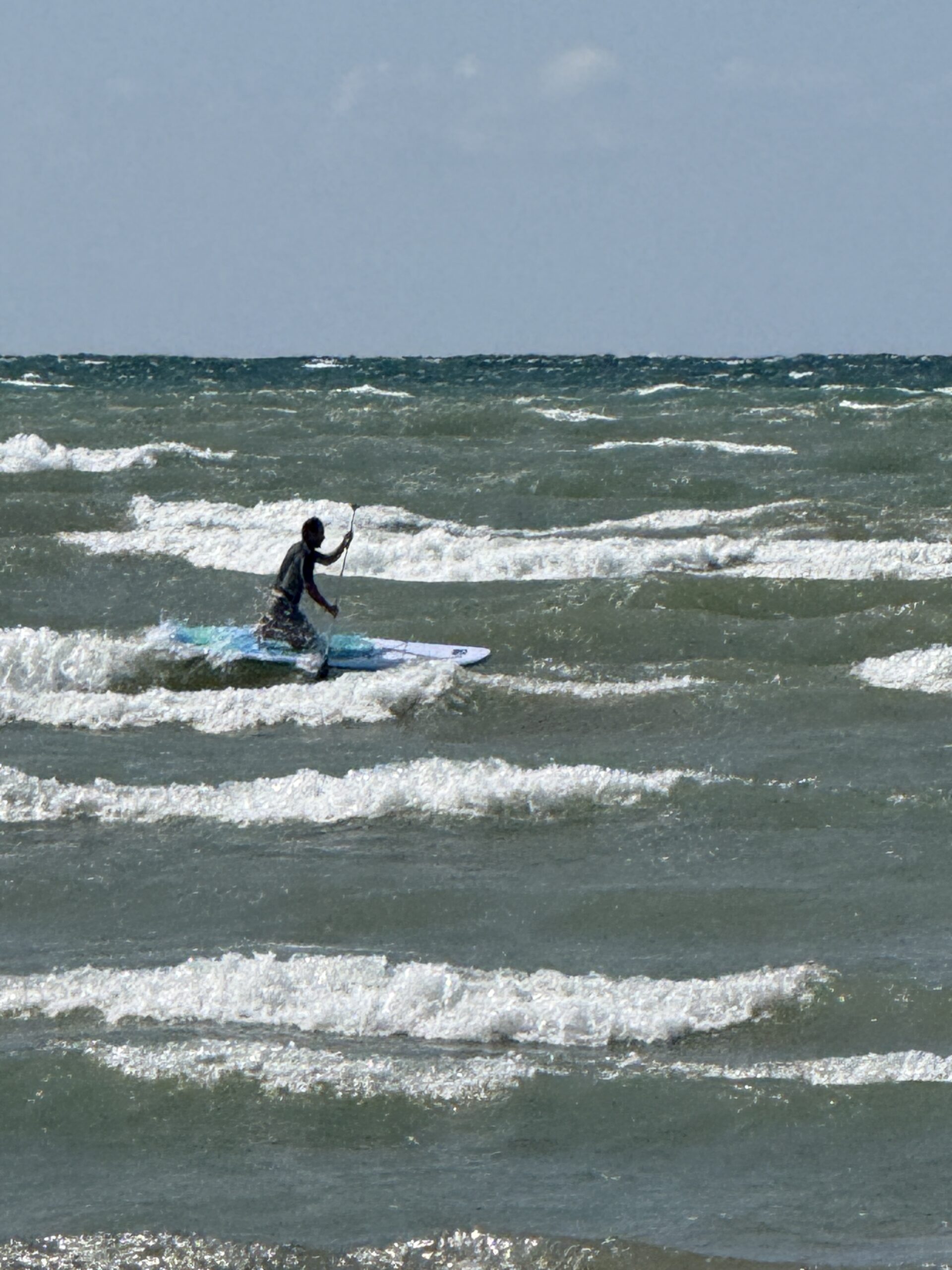
Yes, wind can build surfable waves on Georgian Bay, but freshwater wave conditions behave differently from the consistent ocean-swell picture many beginners have in mind. The lake can be flat for long periods, and rough water is not automatically safe surfing water.
Wind is the starting point
Check wind direction, speed, gusts, wave forecasts, air temperature and water temperature. A spot that works with one wind direction might be unsuitable in another. Strong wind also raises the stakes for getting back to shore.
A cold-water mindset
Georgian Bay can be dangerously cold even when the air is comfortable. Choose immersion protection for the water temperature, understand signs of cold-water stress and avoid solo sessions. Experienced companions and an appropriate rescue plan matter.
Surfing isn’t the same as swimming
Breaking waves, rocks, shallow hazards, current, nearby craft and rapidly changing weather can make entry and exit difficult. Stay within your abilities, learn with a qualified instructor where possible and follow posted local access rules.
Check access before choosing a location
Not all beaches or conservation areas permit every water activity. Check landowner or park rules, parking restrictions and environmental protections. Don’t infer that a spot is public or safe because it appears in a social-media video.
Other days on the water
When wave conditions are not suitable, a carefully planned kayak or SUP outing may be an alternative in appropriately sheltered, calm weather. Never treat either as automatically safe in offshore winds.
Final checks
Consult current marine forecasts and official site-specific advisories. Never follow an old article as if it is a live spot or safety report.
EDITORIAL DRAFT: have a qualified local freshwater surfer review, add verified legal access guidance and original photography before publication.