

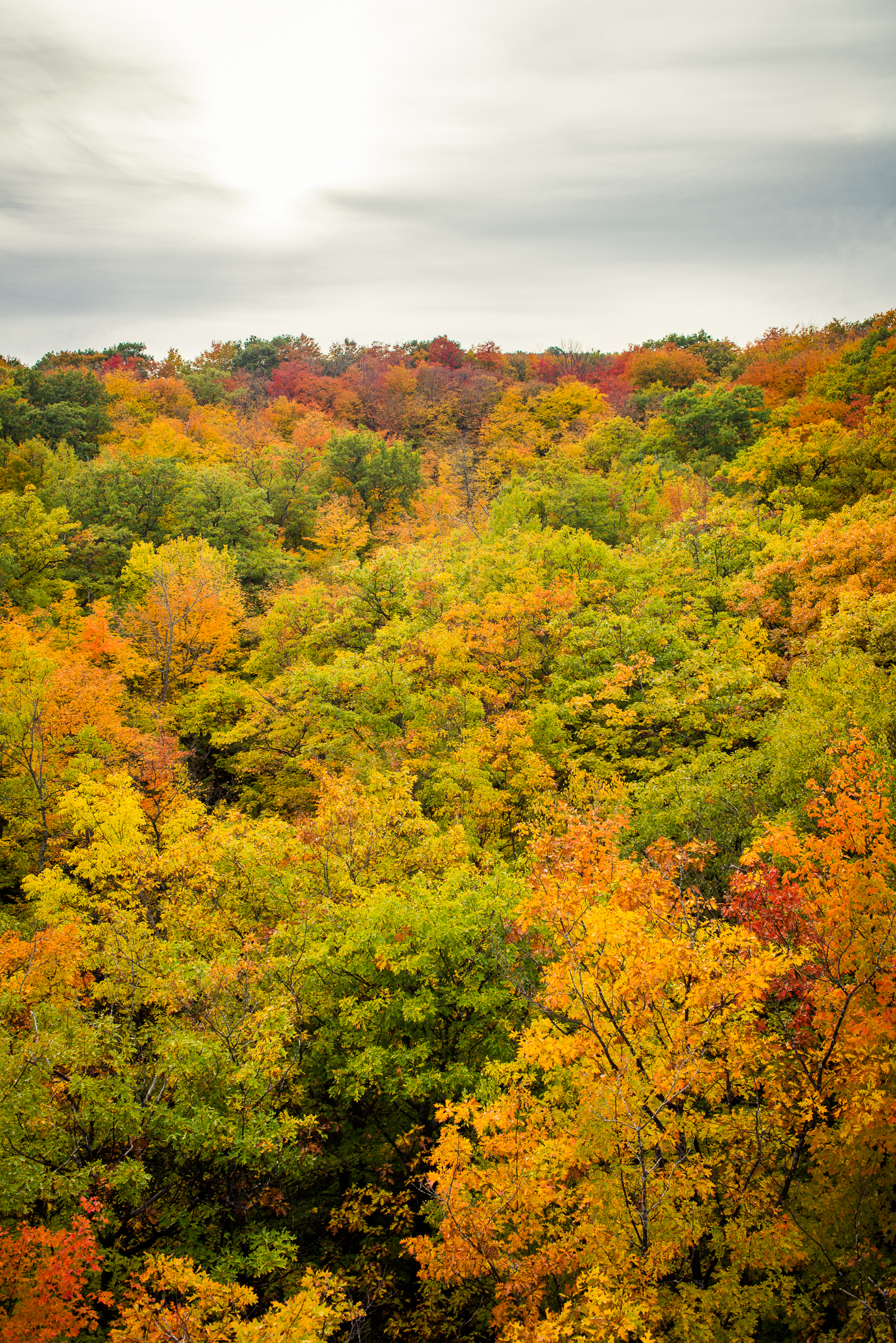
Autumn is a good time to make a hike more deliberate. Before choosing a viewpoint, choose the route, the legal access point and the time you will start heading home. Those decisions matter more than an attractive photograph of the escarpment.
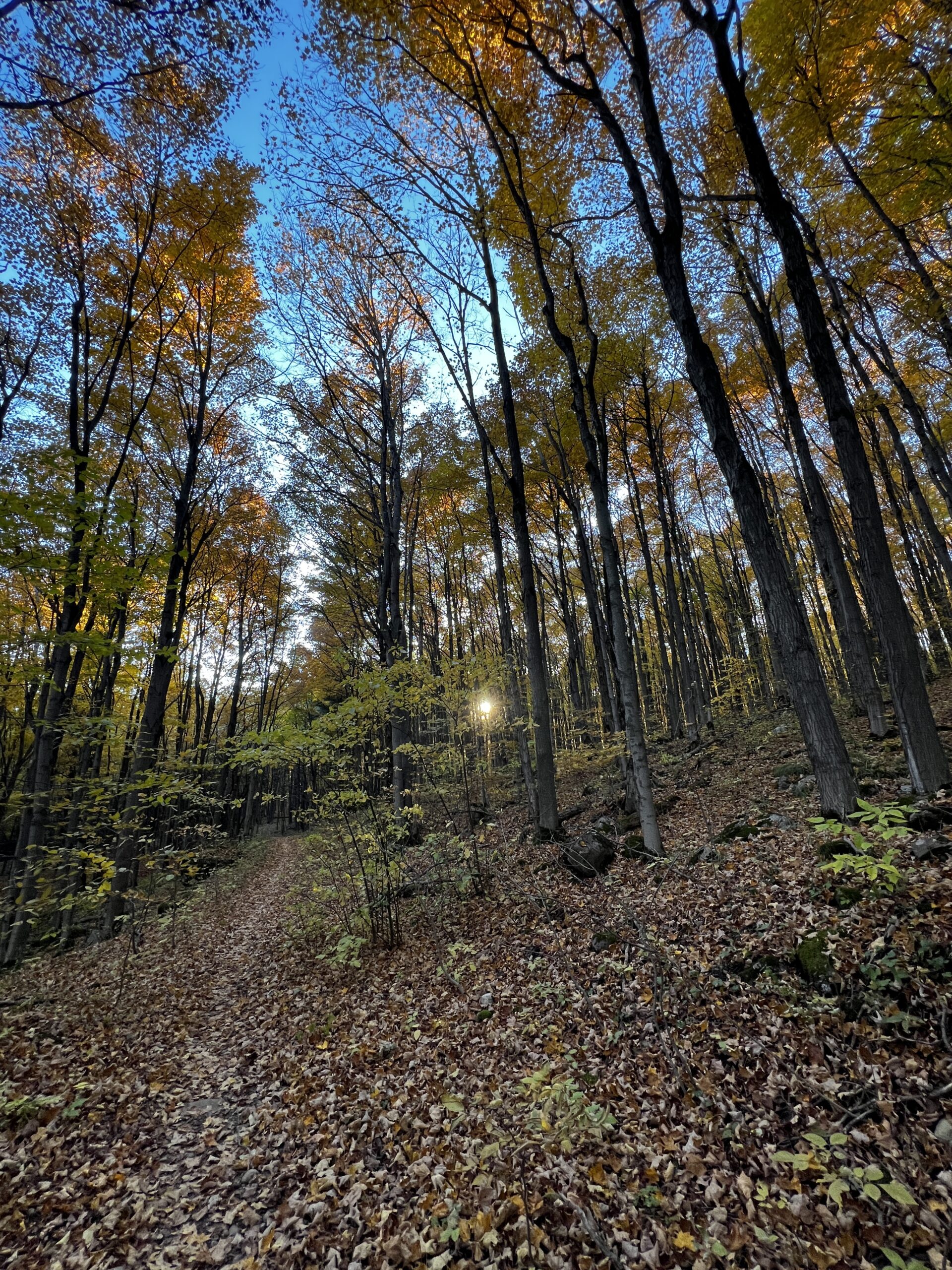
Around Collingwood and The Blue Mountains, a hiking plan should distinguish a municipal path, a managed attraction and a Bruce Trail outing. They do not share one map, one parking policy or one set of opening arrangements.
Use the map that belongs to the trail
For a Bruce Trail hike, start with the Conservancy’s current route information and notices. Its general poster map is not intended to replace detailed hiking maps. Use the Reference Guide or app information appropriate to your selected section, and check for updates before leaving.
Record the actual parking location and confirm that access is permitted. Do not treat a convenient roadside pull-off or a track visible on an old app as proof of public access.
Match the route to the slowest pace
Plan around the people walking with you, including their comfort on uneven ground and their likely pace when returning tired. A route’s distance alone does not tell you how long the outing will take.
Choose a turnaround time that leaves a comfortable daylight margin. Tell the group what will cause you to shorten the route: slower progress, worsening weather or an access notice that changes the plan. Give someone outside the group the route and expected return time.
Pack for a stop as well as the walk
Carry layers that can be added when you stop, plus food, water and protection appropriate to the forecast. Put a light and spare power where you can find them easily, even when you intend to finish before dark.
Keep navigation available without depending on a reliable phone signal. Review the map before departure and know how your chosen route returns to the vehicle. If the route or terrain exceeds your experience, choose a simpler outing or a suitable organised hike.
Let the trail conditions set the pace
Wet leaves, mud and changing weather are reasons to reassess footing and timing. Avoid shortcuts and respect signs and closures. If a section is unsuitable, turn back or choose another permitted route rather than creating a new path around it.
Make breaks part of the schedule instead of squeezing them into the remaining daylight. A warm layer, a snack and a calm map check can keep a small uncertainty from becoming a rushed decision.
Build a flexible local day
Use our Collingwood and Blue Mountains pages for regional context. Check the trail operator’s current information for the hike itself, and keep a shorter alternative ready.